By Prof. Abdul-Rahman Ahmed and Lydia Kyeraa
Farming involves a succession of decisions. Is the soil dry enough to need watering? Has a grazing animal wandered too far? Is a change in its behaviour a sign that something is wrong? Farmers have always relied on observation and experience to answer such questions. Digital tools offer ways to extend what they can see, measure and act upon.
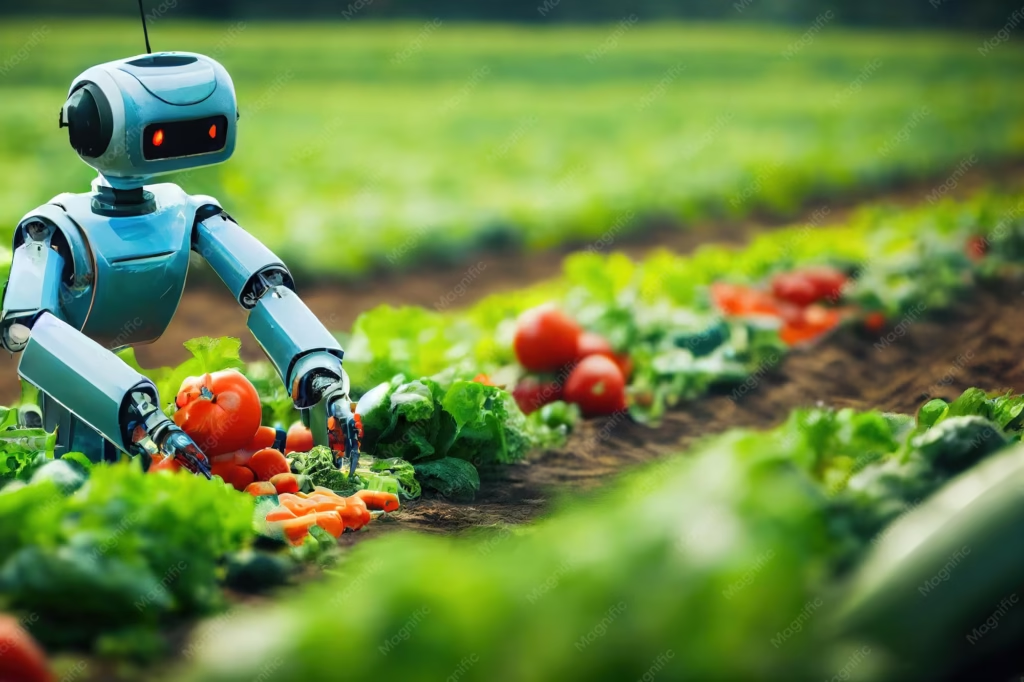
A small electronic sensor can measure moisture beneath the soil surface. A collar can record an animal’s location or activity. A controller connected to an irrigation valve can turn water on when it is needed. These are some of the ideas behind smart agriculture: using measurements to guide decisions, and sometimes allowing equipment to act automatically.
For these tools to work together, information must travel. A reading has to reach the farmer or a controller; an instruction has to reach a pump; an alert has to reach someone who can respond. The communications network provides those connections. Its design can determine whether useful equipment becomes part of everyday farming or remains an impressive demonstration.
Ghana’s discussion of agricultural modernisation needs to give that network more attention. Buying sensors and developing applications are only part of the investment. Connecting them across fields, grazing areas and scattered settlements is a challenge of its own.
Ghana is already exploring the possibilities
There are local initiatives to build upon. KNUST’s DIPPER Lab, Sesi Technologies and Manchester Metropolitan University have collaborated on FarmSense. KNUST reported the launch of its soil sensor in October 2025, describing measurements including soil moisture, temperature and acidity. Such information can help farmers and agricultural advisers understand conditions that are difficult to judge from the surface alone.
Livestock offers another example. DIPPER Lab’s HerdWatch, also described as Aurok-1, uses a wearable collar to collect location, activity and other measurements relevant to animal health. The laboratory describes a prototype ready for field testing, with data sent through an LTE mobile connection to an online platform. Its intended uses include helping farmers locate cattle and recognise signs that an animal may need attention.
KNUST’s Responsible Artificial Intelligence Lab also identifies crop water requirements and automated irrigation among its agricultural research directions. Together, these initiatives show that the discussion extends from crop production to livestock management and equipment control. They represent different stages of development, rather than evidence that connected farming is already widely established.
Their broader relevance raises a practical question: what connections will farmers need if tools of this kind are to become dependable services? A soil test recorded on a phone may be useful without continuous internet access. Remotely following a moving herd or receiving timely alerts presents a different challenge.
What data needs to travel across the farm
Consider an illustrative cooperative growing vegetables and keeping livestock across several dispersed sites. Its members want better irrigation decisions, help locating cattle and a way to send photographs of damaged crops to an extension officer. Each task asks something different of the network.
A moisture sensor may send only a short reading at intervals. The message is small, and the device may need to run for months on a battery. Transmitting continuously would waste energy. A photograph contains far more information, so the connection needs greater capacity: the ability to carry more data in a given time.
An animal collar adds movement to the problem. GPS can help the device determine where the animal is, but that position still needs a separate communication link to reach the farmer. A location shown on yesterday’s map offers little help when cattle have moved beyond the area the network serves.
Health monitoring introduces urgency. Changes in temperature or activity could trigger an alert for inspection; they do not by themselves establish a diagnosis. The useful service is one that gets a meaningful warning to the farmer or animal-health worker soon enough to investigate.
Automation goes a step further. A sensor provides information; an automated system uses information and agreed rules to operate equipment. An irrigation controller might open a valve when the soil becomes too dry, then close it after a set limit. That action needs safeguards, including a way for the farmer to intervene.
This is why a farm network should be planned around the work. The important questions include how much information must move, how quickly it must arrive, where devices will operate and how long their batteries must last.
The internet is not always required
The cooperative would need to distinguish connections within its farms from connections to services elsewhere. Nearby sensors can send readings to a local controller or a gateway, a device that gathers messages and passes them onwards. The onward connection to the wider internet is often called backhaul.
A local controller can keep irrigation operating during an internet interruption, using stored rules and safe limits. Records can be uploaded when the external connection returns. Remote advice, off-site supervision and shared records still benefit from internet access, but essential farm operations should have a sensible response when it fails.
This distinction can also reduce costs. A short sensor message does not need the same connection as a large image upload. Some decisions can be made close to the equipment, leaving the onward link to carry information that genuinely needs to travel further.
Connecting scattered farms can be commercially challenging. A provider must pay for equipment, power, transmission links and maintenance, then recover those costs from users spread over a wide area. Demand may be modest or seasonal. These conditions can weaken the investment case for conventional mobile expansion.
The problem varies by location. Some farms already have useful cellular coverage, and a service available in a village may perform differently across surrounding fields. The first step is to measure what is available where the equipment will actually work.
Where existing services fall short, the cooperative might aggregate demand and purchase a shared connection from a qualified provider. A processor, irrigation scheme or nearby institution could also contribute demand. Sharing gives more users a way to support the fixed costs, although it still requires dependable payments and clear responsibility for repairs.
Where television white spaces could help
Wireless systems communicate using radio frequencies. The range of frequencies available for different services is known as radio spectrum. Television broadcasting uses part of that spectrum, but the channels occupied by protected services vary from place to place. Subject to regulatory permission, some locally available channels can carry data. These are television white spaces, or TVWS.
Their appeal for agriculture lies partly in how these radio signals travel. Compared with higher-frequency links under comparable conditions, they can offer advantages over distance and around some obstacles. That could help connect dispersed farm sites with fewer intermediate installations. Actual performance still depends on terrain, vegetation, antennas and permitted power.
For our illustrative cooperative, TVWS could carry information between farm clusters and a central point with internet access. Small sensors would use suitable local links to a gateway; they would not each need a specialised TVWS radio. Fibre, cellular service or satellite could provide the onward internet connection.
The FarmBeats research project provides a precedent for combining TVWS links between farm base stations and an internet gateway with local Wi-Fi connections. Its experience on United States farms offers an architectural example to examine, rather than a ready-made cost model for Ghana.
TVWS also has limits. A shared link must accommodate all its users, and large image transfers can compete with other traffic. Availability of equipment and technical support matters. Cellular service, other wireless options and satellite should be compared for the same farming tasks before a technology is selected.
Sharing spectrum requires careful listening (sensing)
Because broadcasters must remain protected, identifying usable channels is essential. Lydia Kyeraa’s MPhil research at KNUST examines one part of this problem: cooperative spectrum sensing. Sensing means listening for evidence that a radio channel is occupied. Cooperation combines observations from several receivers, rather than relying on a single listening point.
A weak broadcast signal may be obscured at one receiver by local conditions or background noise. Combining observations could help the system make a better judgment. Mistaking an occupied channel for an available one risks interference; mistakenly rejecting an available channel wastes a communication opportunity.
Lydia’s work investigates detection methods through simulation, including machine-learning approaches. It contributes to understanding spectrum sharing; it has not demonstrated an agricultural network in the field or established savings for farmers. Testing on real equipment would need to examine accuracy, energy use and processing demands.
Ghana’s published NCA TVWS guidelines require location-based access to an approved database to establish usable channels and power levels. Listening alone does not grant permission to transmit. The guidelines also provide for regulatory fees. Any proposed deployment should therefore confirm current approvals, charges and database arrangements with the NCA.
Build a service that survives the demonstration
The cooperative’s final decision would depend on the complete service cost: radios, installation, electricity or solar power, batteries, internet access and maintenance. A network described as inexpensive at purchase can become costly if faults require repeated specialist visits. Seasonal incomes also matter when bills continue throughout the year.
A useful pilot should begin with a farming decision that participants value, such as scheduling irrigation or locating animals. It should test whether information arrives when needed, whether equipment behaves sensibly during outages and whether farmers can obtain support. Agricultural specialists should assess whether the information actually improves practice, while network specialists compare feasible connections under the same conditions.
Trials should run through relevant seasons and operating conditions. They should establish who owns the equipment, who protects access to farm data and controls, who repairs failures and how replacement parts will be paid for. Expansion should follow evidence that both the agricultural application and the service model work.
Ghana has researchers and enterprises developing tools for more informed farming. Connecting those tools deserves the same practical attention as building them. For the farmer, the value will be water applied at the right time, an animal found sooner or a warning investigated before a problem grows. The network earns its place when it makes those outcomes dependable.