The number of countries that have eliminated at least one neglected tropical disease (NTD) has increased to 63, up from 42 at the end of 2020, according to the World Health Organization (WHO).
The development represents significant progress in global efforts to control and eliminate diseases that disproportionately affect the world’s poorest and most vulnerable communities.
However, WHO says the gains remain fragile, with inadequate funding, gaps in disease surveillance and uneven progress threatening efforts to achieve the targets set for 2030.
These findings are contained in the Global Report on Neglected Tropical Diseases 2026, which provides a midterm assessment of the implementation of the WHO 2021–2030 road map.
The report indicates that the number of people requiring interventions against NTDs fell to 1.41 billion in 2024, representing a 36 per cent reduction since 2010 and a 19 per cent decline since 2020.
It also highlights major improvements in the control of some diseases. Cases of sleeping sickness, also known as human African trypanosomiasis, have declined by 98 per cent since 1999, while Guinea worm disease recorded just 10 human cases in 2025, its lowest level on record.
Despite these achievements, WHO warns that sustaining the progress will require stronger government commitment, increased domestic financing and continued support from international development partners.
WHO Director-General warns against losing progress
WHO Director-General Dr Tedros Adhanom Ghebreyesus described the elimination of neglected tropical diseases as one of the major success stories in global health.
However, he cautioned that the progress made over the years could be reversed without sustained investment and stronger health systems.
“Elimination of neglected tropical diseases is one of the standout success stories of global health,” said Dr Tedros Adhanom Ghebreyesus, WHO Director-General.
“However, the hard-won gains we have made could easily be lost, so countries and partners must step up, not step back, by increasing domestic financing, sustaining external support and integrating NTD services into primary health care,” saying the goal is not only to eliminate diseases, but to free communities from disability, disfigurement, death and generational poverty.
Scientific advances provide new treatment options
The report also identifies advances in science and medicine that are providing new opportunities to prevent and treat neglected tropical diseases.
Among the developments is the WHO-prequalification of child-friendly arpraziquantel for the treatment of schistosomiasis.
Other advances include the availability of generic miltefosine for leishmaniasis and a dengue vaccine.
In addition, two chikungunya vaccines and new medicines for onchocerciasis and human African trypanosomiasis have received regulatory approval.
These developments are expected to strengthen the range of tools available for disease prevention and treatment.
However, WHO says scientific progress alone will not be sufficient to achieve the global targets, particularly where health systems lack the resources and capacity to deliver interventions effectively.
Rising dengue cases and gaps in disease control
Although the report records substantial progress against several NTDs, it also highlights areas where global efforts are falling behind.
Dengue cases reached a record 15.1 million in 2024, while deaths from vector-borne neglected tropical diseases have increased. Efforts to eradicate yaws are also off track.
The report further reveals that only three disease-specific indicators reached their 2025 milestones, highlighting the difficulty of achieving the targets established under the 2021–2030 road map.
WHO also identifies weaknesses in disease data collection and reporting as a major challenge. Gaps in comprehensive and timely information, including data disaggregated by gender, are making it difficult to accurately assess progress and identify populations that require targeted interventions.
The situation raises concerns about the ability of countries to monitor disease trends and measure the effectiveness of interventions.
Funding shortages threaten disease control programmes
One of the major concerns highlighted in the report is the continued dependence of neglected tropical disease programmes on international development assistance.
Between 2018 and 2024, nearly 80 per cent of international development assistance for NTDs came from a small number of donors.
WHO warns that this concentration has made programmes particularly vulnerable to sudden reductions in financial support.
The resulting funding disruptions have affected mass treatment campaigns, case management, disease surveillance and vector control activities.
They have also created the risk of donated medicines expiring because programmes no longer have sufficient resources to distribute them.
Overall, resources available for neglected tropical diseases remain 30 per cent below pre-COVID-19 levels, with dedicated funding for some programmes having almost disappeared.
The funding situation presents a significant challenge to countries that depend on external assistance to sustain disease prevention, treatment and elimination activities.
Countries adopt integrated approaches to disease control
Despite the financial challenges, WHO says several countries are taking steps to make their NTD programmes more sustainable.
More countries where neglected tropical diseases are prevalent are incorporating interventions into national health strategies, essential health service packages and domestic budgets.
There is also growing emphasis on delivering interventions for multiple diseases through shared health services rather than operating separate programmes for each disease.
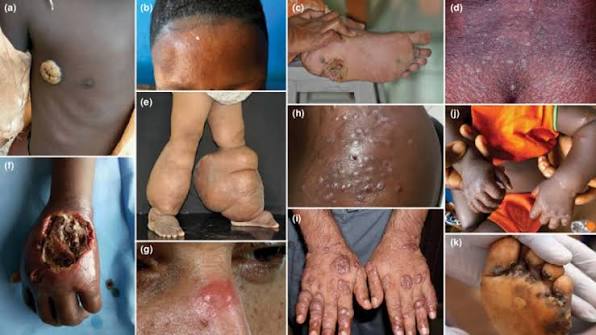
One example is the WHO-recommended integrated strategy for skin-related neglected tropical diseases.
The number of countries adopting the strategy has already exceeded the 2030 target, with 43 countries having adopted integrated strategies for skin-related NTDs, according to the report’s executive summary.
The approach is intended to improve efficiency by bringing interventions for different diseases together through shared services.
Such integration is also expected to strengthen the delivery of health services and make better use of available resources.
WHO calls for accelerated action before 2030
With five years remaining before the 2030 deadline, WHO says countries and development partners must accelerate efforts to protect the progress already achieved and address persistent gaps.
The organisation is calling on countries affected by neglected tropical diseases to increase domestic financing and incorporate NTD interventions into universal health coverage.
It is also urging governments to adapt disease control programmes to changing circumstances, including conflict situations and climate change.
Donors are being encouraged to broaden their financial support across different NTD interventions rather than concentrating assistance on a limited number of programmes.
Recipient countries are also being asked to diversify their funding sources to reduce dependence on a small number of international development partners.
The report recognises that considerable progress has been made despite limited resources, but stresses that stronger and sustained action will be necessary to meet the 2030 targets.