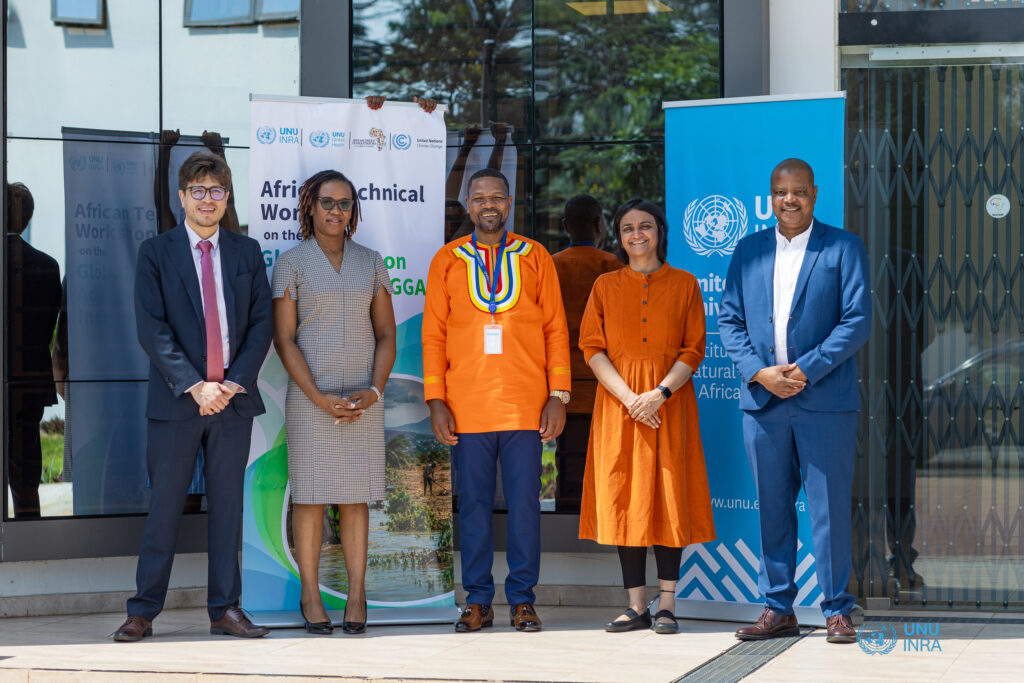
Ghana is taking part in a pilot exercise to determine whether a new set of global climate adaptation indicators can accurately measure how countries are preparing for climate risks and protecting vulnerable populations.
The initiative brings together the United Nations University Institute for Natural Resources in Africa (UNU-INRA), the United Nations University International Institute for Global Health, the Africa Group of Negotiators (AGN) and the United Nations Framework Convention on Climate Change (UNFCCC).
At a three-day technical workshop in Accra from October 22 to 24, participants are assessing how the 59 Belém Adaptation Indicators align with Ghana’s national adaptation priorities, particularly in disaster risk reduction and health.
The exercise is expected to identify what Ghana can already measure, where information is lacking and whether the indicators adequately reflect the country’s adaptation objectives.
Opening the workshop, UNU-INRA Director Dr Richard Munang challenged participants to look beyond climate expenditure and focus on the people expected to benefit from adaptation programmes.
“Adaptation is not what we spend. Adaptation is who we protect,” he said.
His remarks placed accountability at the centre of discussions on how governments should assess the effectiveness of measures designed to help communities withstand the effects of climate change.
Focus shifts to lives and livelihoods
For Dr Munang, the effectiveness of climate adaptation must be demonstrated through improvements in people’s living conditions and their ability to withstand climate-related shocks.
He recounted his childhood experience in north-western Cameroon, where poor maize harvests left his family struggling to secure food. The experience, he explained, shaped his understanding of how changing climatic conditions can compound the difficulties faced by vulnerable households.
He argued that adaptation programmes must deliver tangible benefits, particularly for families whose livelihoods depend on climate-sensitive activities.
Dr Munang also drew attention to the relationship between disaster management and healthcare, warning that failures in one area can create serious consequences in the other.
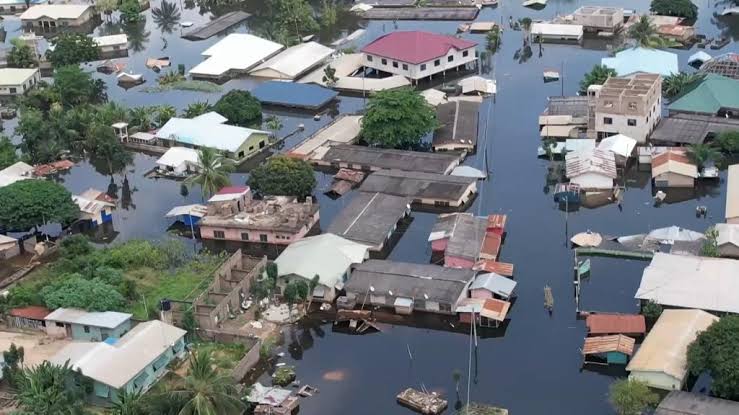
Flooded roads may obstruct emergency medical services, while damaged water infrastructure can expose communities to disease. Early-warning systems that fail to reach people promptly can also leave them exposed to hazards that could otherwise be anticipated.
“When adaptation fails, the bill goes to the hospital,” he said.
The workshop is examining disaster risk reduction and health together to help establish how adaptation measures in these areas can be assessed against practical outcomes.
Ghana to assess existing systems
Ghana’s National Adaptation Plan and relevant sector frameworks will provide the basis for testing the indicators.
The assessment is intended to determine whether existing national data systems can support the required measurements, what institutional responsibilities need to be clarified and where additional technical capacity may be necessary.
Stella Oku of the Environmental Protection Authority, representing the Chair of the Africa Group of Negotiators, said the exercise should strengthen existing reporting arrangements rather than introduce unnecessary parallel systems.
“The conversation is not to create different reporting formats,” she said.
She explained that the immediate task is to examine what information and reporting mechanisms are already available, identify deficiencies and establish how national systems can be improved to accommodate the indicators.
The exercise is also expected to help Ghana assess whether its adaptation interventions are contributing to greater resilience.
For other African countries, the Ghanaian experience could offer lessons on how to apply the global framework while accounting for differences in national priorities, data availability and institutional capacity.
UNFCCC highlights importance of testing indicators
Motsomi Maletjane of the UNFCCC Secretariat’s Adaptation Division said testing the indicators was an important part of determining how they could be applied in different countries.
He explained that countries had agreed to test the indicators voluntarily following their adoption at COP30. The experience from these exercises is expected to contribute to the development of methodologies and guidance for their application.
“These exercises by Ghana, many other countries that are doing similar exercises are very key to being able to tell how countries can start to work with the indicators,” he said.
The findings will also help inform discussions on how countries can report adaptation progress and use the indicators in their own planning processes.
For Ghana, the assessment will involve mapping national priorities against the relevant targets, reviewing the practicality of measuring the indicators and identifying shortcomings in data, methodology, institutional coordination and resources.
Health must feature in adaptation planning
Dr Revathi Phalkey, Director of the United Nations University International Institute for Global Health, said the workshop should help clarify how countries articulate their adaptation ambitions and determine whether available systems can measure progress towards them.
“What we really need to measure is where do we need to go and how fast we can get there,” she said.
Her contribution reinforced the importance of assessing whether adaptation plans are moving countries towards their intended goals, rather than relying only on comparisons with previous performance.
The health focus is particularly relevant to the workshop’s assessment because climate-related hazards can affect access to essential services and place additional pressure on healthcare facilities.
By bringing health and disaster risk reduction into the same technical exercise, participants are seeking to improve understanding of how the indicators can capture the effects of climate action across these connected areas.
Findings expected to support Africa’s climate negotiations
The workshop is expected to produce an assessment of how Ghana’s adaptation priorities align with the indicators, a review of data and implementation gaps, practical guidelines for future country-level exercises and policy messages for African engagement in the international climate process.
These outputs are intended to support discussions ahead of COP31 and COP32 and help African countries develop a stronger evidence base for their adaptation priorities.
Dr Munang called for African negotiators to use evidence from national assessments to determine whether the indicators are suitable for the continent’s needs.
“Africa is not poor. Africa is uncounted,” he said, stressing the need for African countries to strengthen the information used to assess their climate risks and adaptation efforts.
The Ghana pilot is expected to help establish a practical approach that can be adapted by other countries seeking to measure progress under the Global Goal on Adaptation.
For the exercise to deliver its intended value, the findings will need to translate into clearer implementation priorities, stronger monitoring systems and better evidence of whether adaptation interventions are reducing vulnerability.
As Dr Munang told participants: “We can only say we have adapted if that child who is playing aside today will not end up in a clinic tomorrow.”
The statement captures the central challenge facing countries as they seek to turn climate commitments into action: demonstrating that adaptation efforts are making a measurable difference to the people they are designed to protect.