When floods block roads, drains overflow and contaminated water threatens public health, the consequences are felt in homes, markets, farms and health facilities across West Africa. But how can governments determine whether the money spent on climate adaptation is making communities safer?
That question took centre stage at a three-day African technical workshop in Accra, where experts examined how countries can measure progress in adapting to climate change and whether global indicators reflect the realities facing African communities.
“Adaptation is not what we spend. Adaptation is who we protect,” said Dr Richard Munang, Director of the United Nations University Institute for Natural Resources in Africa (UNU-INRA).
His message was direct: climate adaptation must be judged by the difference it makes to people’s lives, not simply by the amount of money committed to projects.
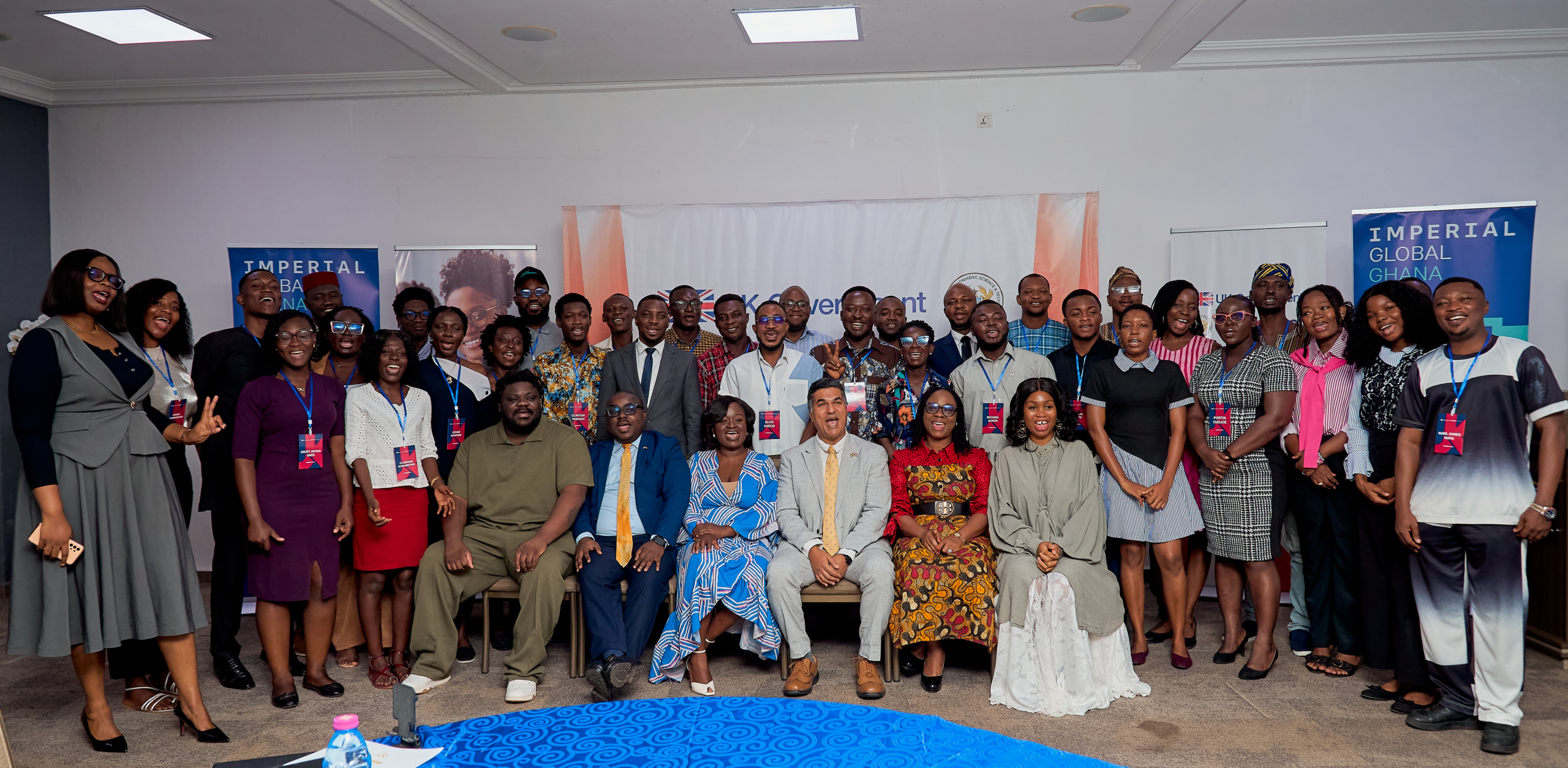
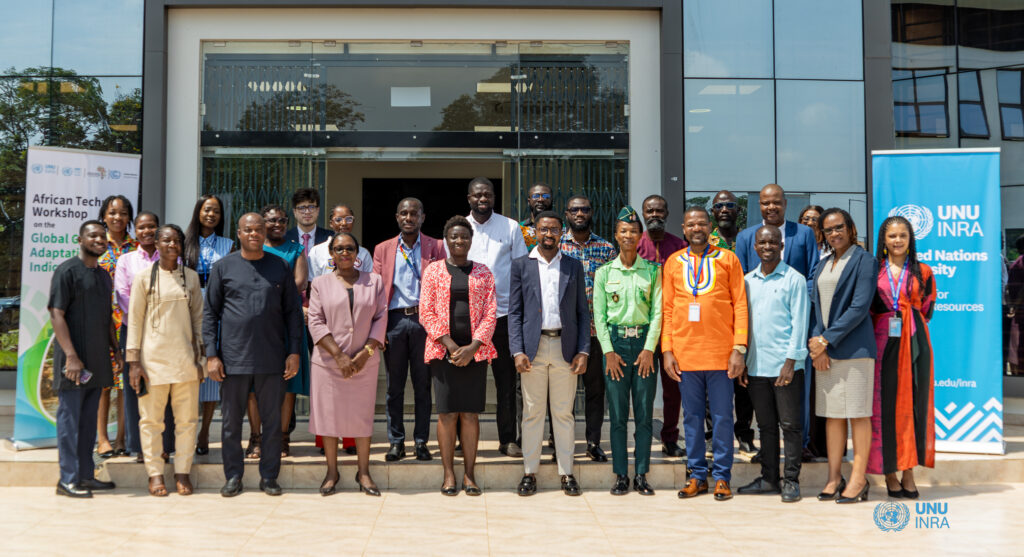
The workshop, held from 22 to 24 October 2026 at the West African Genetic Medicine Centre in Accra, brought together representatives of African governments, climate negotiators, technical institutions, the United Nations University and the United Nations Framework Convention on Climate Change (UNFCCC).
Ghana is serving as the pilot country for an assessment of the 59 Belém Adaptation Indicators, with particular attention to disaster risk reduction and health.
The exercise seeks to establish whether the indicators adopted under the Global Goal on Adaptation can adequately capture national priorities, what existing data systems can measure and where governments need to strengthen their capacity to track results.
For West Africa, where floods, droughts, unpredictable rainfall and extreme heat threaten livelihoods and essential services, the question of how adaptation is measured has practical implications for communities and public institutions.
When climate risks become health emergencies
Climate-related disasters do not end when floodwaters recede. Damaged roads can prevent ambulances from reaching patients, while contaminated water can expose communities to diseases. Inadequate drainage and delayed early warnings can turn preventable risks into emergencies.
Dr Munang argued that these connections must be reflected in how governments assess adaptation spending and its results.
“When adaptation fails, the bill goes to the hospital,” he said.
The statement captures one of the workshop’s central concerns: adaptation efforts must be assessed alongside their consequences for public health.
A drainage project, for instance, should not be judged solely by the money allocated to it. Its effectiveness also depends on whether it reduces flooding and protects nearby communities. Similarly, early-warning systems must be assessed by whether they reach people in time to help them prepare for impending hazards.
For West African countries facing competing development needs and limited resources, the ability to identify successful interventions—and those that are failing—can help inform decisions about where further investment is needed.
Dr Munang called for stronger evidence to establish whether adaptation measures are delivering the intended benefits.
“Because if you don’t count what is failing, you cannot fix it,” he said.
Ghana tests the global framework against national needs
The Accra workshop is designed to assess how Ghana’s National Adaptation Plan and relevant sector priorities align with the global indicators.
Participants are examining the relationship between the indicators and Ghana’s priorities in health and disaster risk reduction, while considering whether the necessary data, methods and institutional arrangements are available.
Stella Oku of Ghana’s Environmental Protection Authority, representing the Chair of the Africa Group of Negotiators, said the exercise would help institutions build on existing national reporting systems rather than create separate processes.
“The conversation is not to create different reporting formats,” she said.
Instead, the aim is to determine how existing systems can support reporting against the indicators, identify gaps and establish what needs to improve.
This matters because governments cannot reliably assess adaptation progress without information that shows what interventions have achieved, where implementation is falling short and what additional support is required.
The Ghana pilot is also intended to generate lessons that other African countries can adapt to their own circumstances.
Measuring progress beyond past performance
Dr Revathi Phalkey, Director of the United Nations University International Institute for Global Health, said the assessment should help countries determine whether their systems can measure progress towards their adaptation ambitions.
“What we really need to measure is where do we need to go and how fast we can get there,” she said.
Her remarks point to a broader challenge for countries implementing climate adaptation plans: measuring progress should involve more than documenting what has already been achieved. It should also help establish what remains to be done and how quickly governments and their partners need to act.
The health dimension is particularly important because the effects of climate hazards often extend beyond immediate damage to infrastructure and property.
For communities across West Africa, the ability to access healthcare during floods, maintain safe water supplies and protect livelihoods from climate shocks can make a significant difference to their resilience.
Bringing health and disaster risk reduction together in the assessment offers an opportunity to examine these connections within the wider adaptation framework.
UN climate officials look to lessons from Ghana
Motsomi Maletjane of the UNFCCC Secretariat’s Adaptation Division said countries had agreed to test the indicators voluntarily following their adoption at COP30.
The practical experience gained from these exercises is expected to contribute to the development of indicator methodologies and help establish how the framework can be applied in different national contexts.
“These exercises by Ghana, many other countries that are doing similar exercises are very key to being able to tell how countries can start to work with the indicators,” he said.
The process is intended to support countries in reporting on adaptation progress while also informing their own planning.
For African governments, the challenge is to ensure that a global framework remains useful across countries with different climate risks, development priorities, institutional capacities and data systems.
The Ghana assessment is expected to identify areas where national priorities align with the indicators, gaps in data and implementation, and outcomes that may not be adequately captured.
Its findings are also expected to inform practical guidance for subsequent country-level assessments and policy messages for African engagement in the international climate process ahead of COP31 and COP32.
What the exercise could mean for West Africa
Although Ghana is the pilot, the questions raised in Accra are relevant to countries across the subregion.
How can governments tell whether investments in drainage and flood management are reducing risks? Are communities receiving early warnings in time? Can health facilities continue operating during climate-related emergencies? Are existing data systems sufficient to show whether adaptation programmes are working?
The workshop does not, by itself, answer these questions for every West African country. Its purpose is to test the indicators against Ghana’s national priorities and identify the evidence and institutional arrangements needed to measure adaptation more effectively.
The results could provide a practical reference for other African countries seeking to align their national adaptation plans with the global framework without losing sight of their own priorities.
Dr Munang said African countries needed evidence to support their positions in international climate negotiations and to demonstrate whether adaptation investments were producing meaningful results.
“Africa is not poor. Africa is uncounted,” he said.
His argument was that stronger measurement would help African countries show what is working, identify what is not and make better-informed decisions about building resilience.
Ultimately, the value of the exercise will depend on whether it helps governments move from commitments and spending figures to measurable improvements in people’s lives.
As Dr Munang put it: “We can only say we have adapted if that child who is playing aside today will not end up in a clinic tomorrow.”
For West Africa, that is the practical test of climate adaptation: whether the policies, resources and projects put in place today can help protect communities from the risks they face tomorrow.