Ghana must secure sustained domestic funding for scientific research if its national research fund is to deliver home-grown solutions to the country’s economic, environmental and social challenges, the Fund’s Acting Administrator, Prof Abigail Opoku Mensah, has said.
She said establishing the Ghana National Research Fund was an important step, but its success would depend on reliable financing, effective implementation and efforts to ensure that scientific knowledge and technological innovation benefited Ghanaians.
“A law alone does not automatically translate into a fund,” she said.
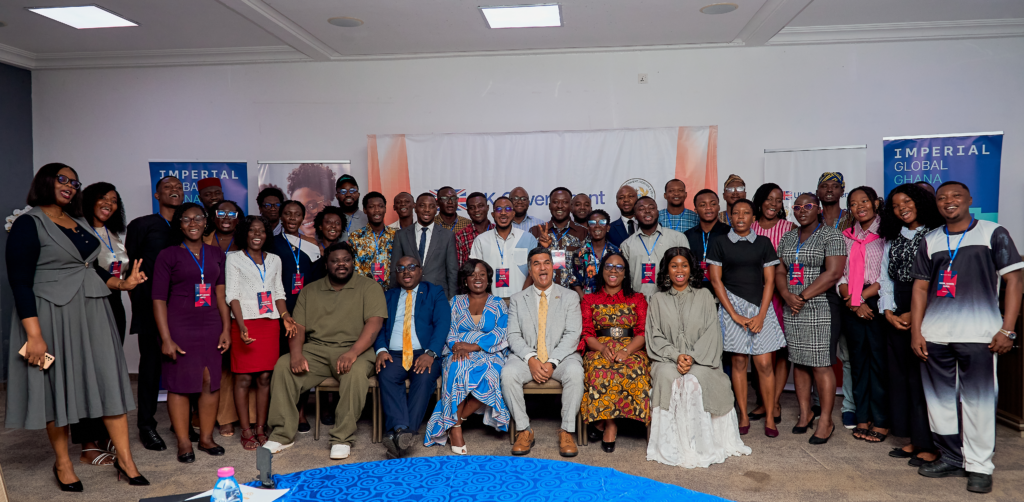
Prof Opoku Mensah was speaking at the opening ceremony of the UK Media Excellence for Emerging Technologies (UK MEET) Fellowship’s Ghana residential programme at the Tomreik Hotel in East Legon, Accra, on Monday, October 12, 2026.
Ghanaian universities and public research institutions have contributed to innovation and human capital development for decades. However, Prof Opoku Mensah said the country had also benefited from technological advances developed through research elsewhere.
She said research and innovation funding in Ghana had been fragmented, with much support coming from foreign development partners.
Although such partnerships had produced valuable work, she warned that excessive reliance on foreign grants could leave the country vulnerable when donors changed their priorities.
“What happens if a shift in the donor’s foreign policy requires them to pull out their support?” she asked.
She said Ghana needed to strengthen domestic investment in research to reduce its vulnerability to changes in external funding.
Prof Opoku Mensah also said Ghana remained well below the African Union’s target for member states to invest at least one per cent of gross domestic product (GDP) in research and development. She said the commitment had been made about four decades ago.
The push for a national research fund came from the academic community and industry over several years. According to Prof Opoku Mensah, the process began under the late President John Evans Atta Mills and continued under successive governments, culminating in the passage of the Ghana National Research Fund Act, 2020 (Act 1056).
The Fund’s governing board was inaugurated in June 2025, five years after the legislation was enacted.
Under Section 3 of Act 1056, GH¢50 million is provided for as seed money to establish the Fund. President John Dramani Mahama subsequently announced a GH¢100 million allocation to support the Fund’s operations for 2026.
The President formally launched the Fund on June 16, 2026, and called for the transparent and accountable use of the resources. The government’s announcement also emphasised the need to implement the Act’s statutory financing arrangements.
Prof Opoku Mensah said the Fund was working with the Ministry of Finance to fully operationalise the statutory quarterly disbursement arrangement linked to national revenue.
Under Section 3 of Act 1056, the Fund may receive an amount not exceeding 0.5 per cent of annual national revenue, to be paid by the Minister responsible for Finance in quarterly instalments.
Five missions to guide research priorities
Prof Opoku Mensah said the Fund had established a secretariat and was putting systems in place with support from the United Kingdom’s Foreign, Commonwealth and Development Office (FCDO), UNESCO and South Africa’s National Research Foundation.
The Fund has adopted a Research and Innovation Strategy for 2026–2030, built around six priorities: research talent, competitive funding, industry partnerships, policy support, sustainable finance and strong governance.
The strategy identifies five national research missions food systems, health innovation and biosecurity, climate and environmental sustainability, digital and industrial transformation and governance, policy and social systems
These missions are intended to guide research and innovation towards areas considered important to Ghana’s development.
Prof Opoku Mensah said two multilateral pilot funding calls had been launched through co-funding arrangements involving Canada’s International Development Research Centre (IDRC) and the Science Granting Councils Initiative (SGCI).
The calls cover artificial intelligence, health and disruptive technologies aimed at developing solutions linked to the Sustainable Development Goals.
She said two additional national calls were scheduled to open before the end of 2026.
The strategy and planned calls set out the Fund’s intended direction. However, the keynote did not provide evidence of measurable outcomes already delivered through the new funding arrangements.
Journalists urged to make science accessible
Prof Opoku Mensah called on journalists and content creators to explain science, technology and innovation in simple language that the public could understand.
She identified artificial intelligence, climate and environmental risks, biomedical innovation and the circular economy as subjects that aligned with the Fund’s research missions.
She said journalists had an important role in making scientific knowledge and technological developments accessible and relevant to Ghanaian society.
The Ghana National Research Fund Act includes the promotion of technology and knowledge transfer, as well as the implementation of research results and findings.
Prof Opoku Mensah said the media’s role in disseminating research and communicating new technologies was important to helping Ghanaians understand and adopt useful innovations.
She urged journalists to find innovative ways to work with Ghana’s research and innovation community to make science and technology more attractive to the public.
“Act 1056 gave us the road, and the launch in June gave us a vehicle. Whether we arrive depends on whether Ghanaians understand, value and adopt technological innovation and this will be shaped largely by what you publish and communicate,” she said.
She added that Ghana’s research ambitions required the involvement of researchers, government, industry, development partners and journalists.
“Ghana’s research journey needs many arms around it; researchers, Government, industry, partners and you journalist to move in the right direction,” she said.
Can the Fund deliver?
The Ghana National Research Fund now has a legal foundation, a governing board, a strategy and stated research priorities. The challenge highlighted in Prof Opoku Mensah’s address is ensuring that these arrangements translate into sustained support for research.
The Fund’s long-term contribution will depend on the implementation of its financing arrangements, the effective management of grants and its ability to support research aligned with national needs.
The keynote outlines the Fund’s priorities and planned activities, but does not establish what measurable results the new funding system has delivered.
For Ghana, the question is not simply whether a national research fund exists. It is whether the Fund can secure dependable financing, support researchers over time and help turn scientific knowledge into practical solutions that improve lives.