By Esther Nuekie Annang
Medical Editor, West African Journalists for Environment, Science, Health, and Agriculture (WAJESHA)
ACCRA, Ghana
The World Health Organization (WHO) has issued its strongest warning yet over the rapidly escalating Bundibugyo Ebola outbreak in Central Africa, declaring the public health risk “very high” in the Democratic Republic of Congo (DRC) and “high” in neighbouring Uganda as confirmed infections climbed to 1,481 with 454 deaths.
Speaking during a virtual media briefing on Thursday, WHO Africa officials described the outbreak as the largest Bundibugyo Ebola epidemic ever recorded, warning that continued transmission, armed conflict, and cross-border population movement are threatening efforts to contain the virus.
The outbreak, which was declared a Public Health Emergency of International Concern (PHEIC) on May 16, has spread primarily through eastern DRC while Uganda continues to battle imported infections linked to the affected region.
DRC Bears the Brunt
According to WHO’s latest situation report covering July 1–2, the DRC has recorded 1,460 confirmed Ebola cases and 452 deaths, with Ituri Province accounting for more than 90 percent of all infections.
The hardest-hit communities include Bunia, Rwampara and Mongbwalu, where health officials say transmission remains intense and is expanding into previously unaffected health zones.
WHO Regional Director for Africa, Dr. Mohamed Yakub Janabi, described the situation as “grave,” warning that the virus continues to spread through communities despite ongoing emergency interventions.
“The outbreak remains active in eastern provinces of Ituri and North Kivu,” he said, adding that the combination of insecurity and population movement has made containment significantly more difficult.
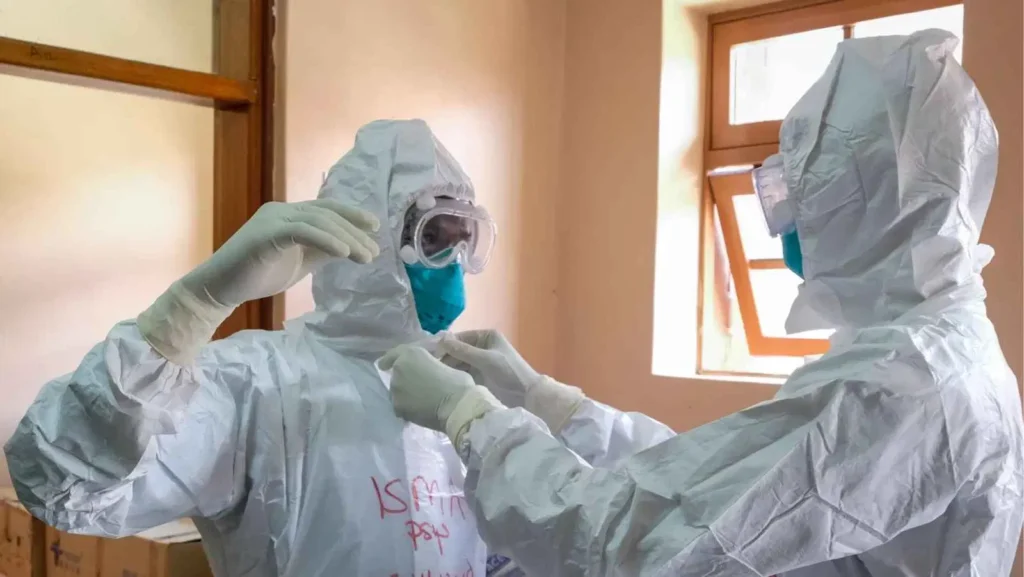
Healthcare workers have also been heavily affected. WHO reported that 102 frontline health workers have contracted the virus, with 25 losing their lives, highlighting the dangers faced by medical personnel responding to the epidemic.
Uganda Records Imported Cases but Avoids Community Spread
Uganda has so far reported 20 confirmed infections, two deaths, and 16 recoveries.
Health officials said encouragingly that no new cases have been recorded since June 21.
Of the confirmed infections, 15 were imported from the DRC, while the remaining five occurred among close contacts and healthcare workers. Importantly, WHO says there is no evidence of sustained community transmission within Uganda.
Nevertheless, the organisation continues to classify Uganda’s risk level as high, citing frequent movement across the eastern DRC-western Uganda border corridor.
WHO officials stressed that vigilance remains essential to prevent imported cases from triggering wider outbreaks.
First Imported Case Reaches Europe
The outbreak has also crossed continents.
France confirmed one imported Ebola case on June 24 involving a medical doctor who had recently returned from Ituri Province in eastern DRC.
Although WHO continues to assess the global risk as low, the imported case underscores the potential for international spread through travel.
No Approved Vaccine Yet as Clinical Trial Begins
Unlike the more familiar Zaire strain of Ebola, the Bundibugyo virus currently has no licensed vaccine or approved antiviral treatment, making outbreak control significantly more challenging.
To address this gap, WHO announced that a major clinical trial began on July 2 in the DRC to evaluate the effectiveness of Mapp Biopharmaceutical’s experimental MBP134 antibody therapy, both alone and in combination with Gilead’s antiviral drug remdesivir.
More than 1,000 patients are expected to participate in the study, making it one of the largest Ebola treatment trials conducted for the Bundibugyo strain.
Health experts say the research could become a major breakthrough if successful.
Conflict Undermining Disease Control
WHO experts warned that insecurity remains one of the greatest obstacles to containing the outbreak.
Pierre Akilimali, a WHO emergency response specialist, said ongoing armed conflict in Ituri Province has made surveillance operations, contact tracing, and rapid response efforts “increasingly difficult.”
Mining communities, where thousands of people move frequently in search of work, are further accelerating transmission.
Since late 2025, more than 100,000 people have been displaced in Ituri, creating conditions that allow the virus to spread more rapidly while making access to vulnerable communities increasingly difficult for health workers.
Regional Cooperation Intensifies
Recognising the cross-border nature of the outbreak, the governments of the DRC and Uganda have signed a memorandum of understanding aimed at strengthening joint surveillance and emergency response.
The agreement provides for shared epidemiological data, coordinated border screening, deployment of rapid response teams, mobile laboratories, and expanded treatment centres along the frontier.
In addition, WHO and the Africa Centres for Disease Control and Prevention (Africa CDC) have launched a $518 million continental response plan covering the period from June to November 2026.
A Joint Continental Incident Management Support Team has also been established at Makerere University in Kampala to coordinate preparedness and response activities across Africa.
Response Efforts Continue
WHO says significant resources are being deployed despite the difficult operating environment.
Three Ebola treatment centres with a combined capacity of 80 beds are currently operational in Bunia, while additional treatment units have been established in Mongbwalu, Rwampara, Beni, Goma, and Bukavu.
In Uganda, officials reported notable success in contact tracing, with 821 of 831 identified contacts completing the required 21-day monitoring period.
In contrast, contact tracing coverage in the DRC remains at approximately 45 percent, well below the WHO target of 90 percent or higher.
Financial support is also increasing.
WHO has released $3.9 million from its Contingency Fund for Emergencies, while the European Union has committed €15 million, including €5 million specifically allocated to WHO’s response.
What West Africa Needs to Know
Health experts say the outbreak should serve as an important warning for West African countries.
WHO has identified Ghana and other ECOWAS member states as Priority 2 countries for preparedness, urging governments to strengthen surveillance systems, improve laboratory readiness, and reinforce infection prevention measures at points of entry.
Rather than imposing blanket travel bans, WHO recommends exit screening at airports, seaports, and land border crossings, combined with rapid detection and isolation of suspected cases.
Bundibugyo Ebola spreads through direct contact with the blood or body fluids of infected individuals, including contaminated surfaces and materials.
Early symptoms include fever, severe headache, muscle pain, vomiting, diarrhoea, and weakness, while severe illness can progress to internal and external bleeding.
With no approved vaccine currently available, public health experts stress that early detection, prompt isolation of patients, safe burial practices, rigorous infection prevention, and community awareness remain the most effective tools for preventing further spread.
As the outbreak continues to evolve, WHO says containing transmission in eastern DRC remains the world’s immediate priority to prevent a wider regional health emergency.