A World Environment Day Call to Conscience, Accountability, and Collective Action
By the Editor-in-Chief, WAJESHA
The Earth Has Not Forgotten What We Have Done to It
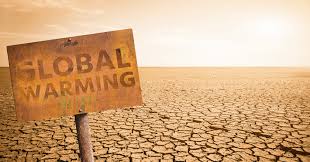
There is a village in northern Burkina Faso where the baobabs no longer return. The elders remember when those ancient trees stood like sentinels against the Sahel sky, roots so deep they touched the memory of the earth itself. Today, the trees are gone. The topsoil is gone. The rains arrive late, if at all, and when they do, they come in fury rather than grace, tearing through fields where millet once grew, leaving behind gullies where children played. The people are not just hungry. They are disappearing.
This is not a parable. This is West Africa in the second quarter of the twenty-first century. And versions of this village exist in every country across our region: from the shrinking shores of Lake Chad to the drowning coastlines of Togo and Benin; from the oil-sick creeks of the Niger Delta to the illegal goldmines poisoning rivers in Ghana and Guinea; from the smog-choked arteries of Lagos and Abidjan to the once-magnificent forests of Sierra Leone and Liberia, now stripped to their bones by chainsaw and greed.
On this World Environment Day, WAJESHA does not merely observe. We bear witness. We hold a mirror to the decisions of governments, the conduct of corporations, the complicity of communities, and the conscience of citizens. Because the environmental catastrophe engulfing West Africa is not a natural disaster. It is a man-made emergency, and it demands a man-made reckoning.
“The environmental catastrophe engulfing West Africa is not a natural disaster. It is a man-made emergency, and it demands a man-made reckoning.”
Why World Environment Day Must Mean More in Africa
Established in 1972 by the United Nations Environment Programme (UNEP) and observed every year on June 5, World Environment Day is the world’s largest platform for environmental public outreach, celebrated by millions of people across more than 143 countries. Yet for Africa, the continent that contributes least to global greenhouse gas emissions and suffers most from their consequences, this day must carry a weight that transcends symbolic gestures and government press releases.
Africa is home to 60 percent of the world’s remaining arable land, the Congo Basin (the planet’s second lung after the Amazon), and some of the most extraordinary biodiversity on Earth. West Africa alone harbours the Upper Guinea Forest, one of the world’s 36 biodiversity hotspots. These are not merely Africa’s gifts. They are humanity’s inheritance. Yet we are squandering them at a rate that future generations will judge as criminal negligence on a civilisational scale.
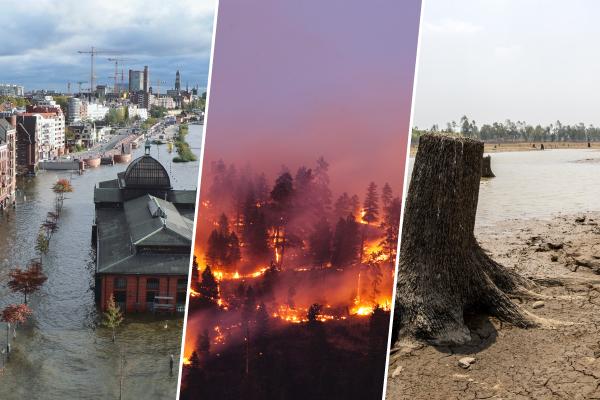
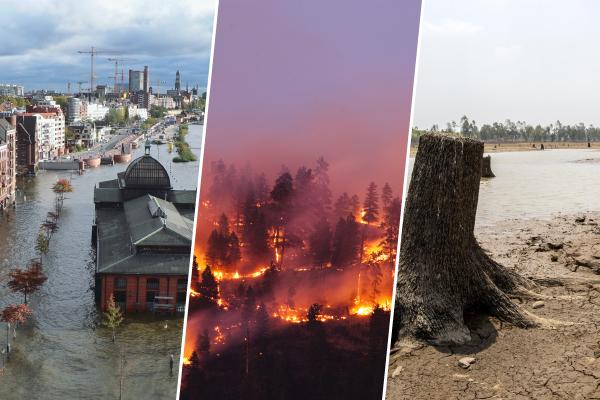
According to the Intergovernmental Panel on Climate Change (IPCC), Africa is warming at a rate faster than the global average. The continent faces temperature increases of up to 3 to 4 degrees Celsius above pre-industrial levels by 2100 under high-emissions scenarios, a threshold that would render vast portions of the Sahel and coastal West Africa uninhabitable. The time for measured, diplomatic language about environmental challenges has passed. What we need now is the truth, told plainly and urgently.
The Crisis in Detail: What Is Happening to Our Region
Climate Change: The Multiplier of All Crises
Climate change is not a future threat for West Africa. It is a present emergency. The Sahara Desert advances southward at an estimated rate of 48 kilometres per year, swallowing farmland and displacing communities in Niger, Mali, Burkina Faso, and northern Nigeria. Lake Chad, once the sixth-largest freshwater lake in the world, has lost more than 90 percent of its surface area since the 1960s, according to the United Nations. More than 30 million people who depended on its waters for fishing, farming, and drinking now face an existential crisis that has fuelled conflict, migration, and the recruitment pipeline of extremist groups.
Rainfall patterns across the region have become dangerously unpredictable. Droughts and floods, once opposites on the agricultural calendar, now coexist within the same growing season, devastating smallholder farmers who lack the infrastructure to adapt. The World Bank estimates that without urgent climate action, up to 216 million people across sub-Saharan Africa could become internal climate migrants by 2050.
Deforestation and the Silence of the Forest
West Africa has lost more than 90 percent of its original forest cover. Ghana loses an estimated 135,000 hectares of forest every year. Nigeria, once blessed with vast tropical forest reserves, has one of the highest rates of deforestation in the world. The causes are both structural and immediate: agricultural expansion, illegal logging, charcoal production, and the steady encroachment of extractive industries into protected areas.
The consequences are profound. Forests regulate rainfall, anchor soil, store carbon, and sustain the biodiversity upon which local communities depend. Their loss accelerates climate change, reduces agricultural productivity, increases flooding and erosion, and strips rural communities of the medicinal plants, timber, and non-timber forest products that constitute a critical part of their livelihood and cultural identity.
Flooding, Erosion, and the Betrayal of Urban Planning
In 2022, unprecedented flooding across Nigeria, Niger, Cameroon, and other West African countries killed over 600 people and displaced more than 1.3 million. These were not freak events. They were the logical consequence of decades of failed urban planning, blocked drainage systems, floodplain encroachment, destruction of coastal mangroves, and the hardening of natural surfaces. Cities like Lagos, Accra, Dakar, and Freetown are expanding faster than their infrastructure, and the poorest residents, invariably settled in the most flood-prone areas, pay with their lives and livelihoods when the rains arrive.
Plastic Pollution and the Waste Management Catastrophe
West Africa generates millions of tonnes of solid waste each year, and municipal waste management systems are overwhelmed, underfunded, and poorly governed. Single-use plastics choke drainage systems, contaminate water bodies, poison livestock, and litter beaches that could otherwise support thriving tourism economies. According to UNEP, Africa produces approximately 17 million tonnes of plastic waste annually, and less than 10 percent is formally recycled. In many West African cities, informal waste workers, overwhelmingly women and children, sort through toxic refuse with no protective equipment, earning a dollar or less per day.
Air Pollution: The Silent Pandemic
The World Health Organization estimates that air pollution kills approximately 7 million people globally each year, with Africa bearing a disproportionate share of those deaths. In West Africa, the sources are multiple and compounding: vehicle emissions from ageing fleets, industrial pollution from unsupervised factories, domestic cooking on biomass fuel, open waste burning, and the Harmattan winds that carry dust from the Sahara deep into the region’s lungs every dry season. In Lagos, Accra, and Abidjan, air quality regularly exceeds WHO safety thresholds by factors of ten or more. Children growing up in these cities are not merely uncomfortable. They are suffering permanent respiratory damage before they reach adolescence.
Water Contamination and the Right to Clean Water
Access to clean water remains one of West Africa’s most stubborn development failures. According to the WHO and UNICEF Joint Monitoring Programme, more than 400 million people in sub-Saharan Africa still lack safely managed drinking water. Rivers and groundwater sources are contaminated by agricultural runoff laden with pesticides and fertilisers, industrial effluents discharged without treatment, and the catastrophic consequences of oil spills and illegal mining operations. In the Niger Delta, communities have been drinking oil-polluted water for more than half a century. A 2011 UNEP assessment of Ogoniland, never fully acted upon, described environmental contamination so severe that remediation would take a minimum of 25 to 30 years.
Illegal Mining: Wealth That Destroys the Land That Sustains It
Galamsey, the term for illegal small-scale gold mining, has devastated Ghana’s river systems. The Pra, Birim, Offin, and Ankobra rivers, once teeming with life, are now thick with mercury and sediment. The Environmental Protection Agency of Ghana has identified dozens of water bodies rendered unfit for drinking or farming. Similar illegal mining activities plague Guinea, Sierra Leone, Burkina Faso, and Mali, destroying forest cover, contaminating water supplies, displacing farming communities, and generating revenues that flow overwhelmingly to criminal networks and corrupt officials rather than to the communities whose lands are sacrificed.
Oil Pollution: Decades of Corporate and State Failure
The Niger Delta remains one of the world’s most environmentally devastated regions. Since oil production began in the 1950s, there have been an estimated 7,000 oil spills. Agriculture and fishing, the traditional livelihoods of millions of Ijaw, Ogoni, Urhobo, and Itsekiri people, have been rendered nearly impossible across vast swathes of the Delta. The health consequences are catastrophic: elevated rates of cancer, respiratory disease, skin conditions, and reproductive disorders have been documented across oil-producing communities. The Nigeria National Petroleum Corporation and multinational oil companies have spent decades disputing liability, conducting opaque investigations, and paying inadequate compensation while the land suffers.
Biodiversity Loss: The Unacknowledged Emergency
The IPCC and the Intergovernmental Science-Policy Platform on Biodiversity and Ecosystem Services (IPBES) warn that the world is experiencing a sixth mass extinction event. West Africa is not insulated from this. The region’s forests, wetlands, savannahs, and coastal ecosystems support thousands of plant and animal species found nowhere else on Earth. Chimpanzees, forest elephants, manatees, sea turtles, and dozens of endemic bird species are under pressure from habitat destruction, hunting, and the trade in bushmeat and exotic wildlife. The loss of biodiversity is not merely an aesthetic tragedy. It represents the unravelling of the ecological systems upon which human survival depends.
Unsustainable Agriculture and Food Insecurity
Paradoxically, agriculture, which should sustain the region, is simultaneously a driver of environmental degradation and its primary victim. Slash-and-burn farming practices destroy forest cover and deplete soil. Excessive agrochemical use contaminates water and degrades soil health. The FAO estimates that soil degradation in sub-Saharan Africa costs the region up to 68 billion dollars annually in lost agricultural productivity. And yet, West Africa continues to import food it could produce if its soils were managed sustainably. More than 140 million people in West Africa are food insecure, according to the Famine Early Warning Systems Network. That number is rising.
The Human Face of Environmental Collapse
Environmental statistics become morally serious only when we understand what they mean for human beings, particularly for those with the least power to defend themselves.
Women in rural West Africa spend up to six hours a day collecting water and firewood, time stolen from education, economic activity, and rest, precisely because environmental degradation has depleted these resources closer to home. The WHO estimates that household air pollution from solid fuel cooking, borne disproportionately by women and children, kills 3.8 million people each year globally. In West Africa, young children suffer the highest rates of acute respiratory infection of any region in the world.
Indigenous communities and rural farmers are the custodians of ancestral knowledge about sustainable land use, medicinal plants, and ecological balance. Yet they are consistently excluded from the decisions that determine the fate of their territories. Environmental laws are rarely enforced in their favour. Compensation for land acquisition is routinely inadequate or nonexistent. Their protests are criminalised. Environmental defenders across West Africa face intimidation, violence, and in some cases murder for speaking out against destructive projects.
Young people, who will inherit the consequences of today’s failures, are increasingly aware of the magnitude of what is at stake. Youth-led climate movements are gaining momentum across the region. Their energy is not a distraction. It is a resource that governments and institutions have been catastrophically slow to harness.
“The land does not lie. The rivers do not lie. The skies do not lie. Only those who benefit from the status quo have an interest in questioning what the evidence tells us.”
Governments: Commitments on Paper, Indifference in Practice
Every West African government has ratified the Paris Agreement. Every West African government has submitted Nationally Determined Contributions, their pledges to reduce emissions and adapt to climate change. Every West African government has endorsed the Sustainable Development Goals. And yet, the forests continue to fall, the rivers continue to be poisoned, the illegal mines continue to operate, the environmental agencies remain underfunded and understaffed, and the officials who look the other way continue to be promoted.
The Environmental Impact Assessments that should precede major development projects are routinely conducted superficially, or not at all. Environmental laws that exist on paper are selectively enforced: aggressively against small communities defending their land, permissively toward large corporations with political connections. Climate adaptation funds, where they have been established, are often managed with minimal transparency and subject to the same governance deficits that plague other areas of public finance.
There are exceptions worth acknowledging. Ghana’s national reforestation campaigns, Senegal’s investments in solar energy, Nigeria’s establishment of a Ministry of Humanitarian Affairs and Climate Change, and several countries’ commitments to phase out open defecation show that political will, when genuinely present, can produce results. But these remain isolated examples rather than a regional pattern. The gap between environmental rhetoric and environmental governance remains vast, and costly.
The Indispensable Role of Environmental Journalism
This is precisely why WAJESHA exists. Environmental journalism is not a niche specialism. It is one of the most consequential forms of journalism in the twenty-first century, particularly in West Africa, where the capacity and independence of regulatory agencies is limited and where communities affected by ecological crimes often lack access to legal or political redress.
It is investigative environmental journalism that exposed the full scale of galamsey devastation in Ghana. It is journalists who have documented the decades of oil pollution in the Niger Delta against the determined resistance of powerful corporate and state actors. It is reporters who have tracked the illegal timber trade through the forests of Liberia and Sierra Leone, following the money from chainsaw to export port to overseas markets. It is science journalists who have translated the findings of the IPCC and IPBES into language that policymakers and citizens can understand and act upon.
Environmental journalists in West Africa work under conditions that would be recognised globally as difficult: limited resources, inadequate training, legal threats from powerful interests, and societies that do not always value environmental reporting as urgently as political or economic news. WAJESHA is committed to changing that culture, within journalism and across the societies we serve. The environment is not a beat. It is the story of our survival.
Shared Responsibility: Beyond Government
Environmental protection cannot be outsourced to governments alone. The scale of the crisis, and the depth of the behavioural change required, demands engagement from every sector and every level of society.
Businesses must internalise the true environmental costs of their operations. The era of externalising pollution onto communities and ecosystems while privatising profits is morally and financially unsustainable. Corporate environmental responsibility must go beyond sustainability reports and public relations. It must be embedded in procurement chains, energy sourcing, waste management, and the treatment of communities near extraction sites, and it must be verified by independent auditors rather than the companies themselves.
Civil society organisations have a critical role in monitoring, advocacy, and community education. Religious institutions, which command enormous moral authority in West African societies, have an untapped capacity to shift cultural attitudes toward environmental stewardship. Mosques and churches that preach the sanctity of creation should also organise tree-planting initiatives, discourage open burning, and advocate for clean water access in their communities.
Schools and universities must integrate environmental education into curricula not as an elective or addendum, but as a fundamental subject that equips young people with the scientific literacy and civic engagement skills to understand and address ecological challenges. The student who understands the water cycle, the carbon cycle, and the relationship between deforestation and rainfall is already a more powerful agent of change than any government pledge.
Citizens themselves bear responsibility, individually and collectively. Indiscriminate dumping, open burning, bush burning, and the normalisation of environmental carelessness in daily life are not simply aesthetic problems. They are public health emergencies and markers of a civic culture that has not yet fully internalised the connection between the environment and human wellbeing.
The Path Forward: Solutions That Already Exist
The scale of the crisis can produce paralysis. But the solutions are not speculative. They are available, proven, and in many cases already being implemented at scale elsewhere in the world and in pockets of West Africa. What is missing is political will, sustained investment, and genuine accountability.
Renewable Energy
West Africa receives some of the highest levels of solar radiation in the world. The Sahel, the savannah, and the coast offer extraordinary potential for solar, wind, and small-scale hydro power. Countries like Senegal, Ghana, and Nigeria have made investments in renewable energy infrastructure, but they remain marginal in national energy mixes dominated by fossil fuels. A genuine energy transition, supported by international climate finance and domestic policy reform, would simultaneously reduce air pollution, create millions of green jobs, and reduce the deforestation driven by charcoal dependency.
Climate-Smart Agriculture
Agroforestry, conservation tillage, rainwater harvesting, drought-resistant seed varieties, and integrated pest management are not experimental technologies. They are proven practices that increase yields, protect soil health, reduce farmers’ dependence on expensive agrochemicals, and build resilience against climate shocks. The challenge is not knowledge. It is extension: ensuring that these practices reach the millions of smallholder farmers who need them, supported by responsive agricultural advisory services and accessible rural credit.
Forest Restoration and Protection
The African Forest Landscape Restoration Initiative (AFR100), launched in 2015, committed African governments to restoring 100 million hectares of degraded forest by 2030. As of 2024, commitments exceeded 128 million hectares across 32 countries. But commitments must translate into verified results. Community forest management, whereby local communities are given legal stewardship and economic benefit from forest protection, has been demonstrated across Africa and Asia to be more effective and more durable than top-down conservation approaches. It must be scaled urgently.
Waste Recycling and the Circular Economy
West Africa’s waste crisis is also an economic opportunity. Properly organised recycling sectors create employment, reduce pollution, and generate raw materials for domestic industry. Extended producer responsibility, holding manufacturers financially accountable for the end-of-life management of their packaging, has successfully reduced plastic waste in countries including South Africa, Morocco, and several European nations. Deposit refund schemes for bottles and containers, combined with investment in formal waste collection infrastructure, can transform the way West African cities manage their waste within a decade.
Green Jobs and the Just Transition
A transition to sustainable economies need not mean economic sacrifice. According to the International Labour Organization, the transition to green economies could create 24 million new jobs globally by 2030. For West Africa’s young, growing population, the largest youth cohort in the world, green jobs in renewable energy installation, agroforestry, ecosystem restoration, sustainable tourism, and the circular economy represent an economic opportunity of historic proportions. Governments and educational institutions must invest now to ensure that the region’s youth are equipped to fill those roles.
Stronger Environmental Laws and Enforcement
Laws without enforcement are literature. West Africa has no shortage of environmental legislation. What it often lacks is the institutional independence, the budgetary resources, and the political support to enforce those laws against powerful interests. Environmental agencies must be adequately funded. Environmental crimes, including illegal mining, illegal logging, dumping of hazardous waste, and oil pipeline sabotage, must be prosecuted with the same vigour applied to financial crimes. Whistleblowers and environmental defenders must be legally protected, not criminalised.
Youth-Led Climate Action
From Lagos to Dakar, from Abidjan to Accra, young people are organising, innovating, and demanding accountability. Youth climate networks are mapping deforestation using satellite imagery, holding governments to account on social media, launching community clean-up campaigns, and developing locally appropriate climate solutions. These movements deserve not just admiration but institutional support: funding, platforms, and genuine inclusion in formal policy processes. The next generation will manage the consequences of today’s decisions. They must be empowered to shape those decisions now.
The Verdict of History
Future generations will ask us what we knew, what we saw, and what we chose to do when the evidence of environmental catastrophe was laid plainly before us. The answer to that question is being written right now: in the forest policies of governments, in the board decisions of corporations, in the editorial choices of media organisations, in the classroom practices of teachers, in the shopping choices of citizens, and in the courage or cowardice of every institution that could speak out but chooses silence.
The land does not lie. The rivers do not lie. The skies do not lie. Only those who benefit from the status quo have an interest in questioning what the evidence tells us. And the evidence tells us this: West Africa is at an environmental crossroads. One path leads toward ecological collapse, the unravelling of the natural systems that sustain agriculture, water security, public health, and social stability. The other path leads toward a sustainable, equitable, and prosperous future in which economic development and ecological integrity are understood not as adversaries, but as conditions of each other’s possibility.
West Africa has survived the slave trade, colonialism, structural adjustment, and the political turbulence of independence. We have demonstrated, again and again, a capacity for resilience that defies easy categorisation. But the environmental crisis demands something more than resilience. It demands transformation: transformation of our relationship with the natural world; transformation of the economic models that treat ecological destruction as a legitimate cost of doing business; transformation of the governance systems that allow public resources to be privately captured while public goods such as clean air, clean water, fertile soil, and a stable climate are degraded without consequence.
“Our forests, our rivers, our soils, our skies are not government property to be licensed, sold, and depleted. They are the common inheritance of every West African, born and unborn.”
Our forests, our rivers, our soils, our skies are not government property to be licensed, sold, and depleted. They are the common inheritance of every West African, born and unborn. To allow their destruction under our watch is not merely a policy failure. It is a moral failure of the highest order.
On this World Environment Day, WAJESHA calls on every government in the region to move beyond pledges and produce results: measurable, independently verified, publicly reported results. We call on every corporation operating in West Africa to conduct its business with the same rigour and accountability it would apply in jurisdictions where environmental enforcement is robust. We call on every journalist in our network to investigate, document, and publish without fear or favour the truth about what is happening to our environment. We call on every citizen who reads these words to act, in the home, in the community, in the voting booth, and in every space where the future is being decided.
The village in northern Burkina Faso where the baobabs no longer return is a warning. It is not yet a verdict. The trees can come back, if we choose to plant them. The rivers can run clear again, if we choose to protect them. The skies can breathe again, if we choose to stop choking them. The future of West Africa’s natural heritage is not inevitable. It is a choice. And we must make it together, urgently, and without the luxury of delay.
The land is crying. Africa must answer.
WAJESHA — West African Journalists on Environment, Science, Health and Agriculture
Published on the occasion of World Environment Day | June 5, 2026